A recent op-ed from Ford Foundation’s Lane Sugata and Disability & Philanthropy Forum’s Sandy Ho lays out a pattern that’s familiar to anyone who has spent time inside systems built for someone else’s body and someone else’s pace. Their core argument is simple and a little uncomfortable: philanthropy tends to fund disabled artists as artists first, treating disability as incidental rather than as something that actively shapes what real support has to look like.
That gap shows up in concrete ways. Online applications that don’t work with screen readers or dictation software. A heavy reliance on written narratives that shuts out artists with dyslexia and other learning disabilities. No path to reach an actual human when you need help. Too few disabled people on staff or on the selection committees making the decisions. And underneath all of it, a structural bind: a lump-sum grant can force an artist to choose between accepting a fellowship and keeping the disability benefits they rely on, because a temporary bump in income can trigger a loss of coverage.
Sugata and Ho point to fixes already in motion, like Borealis Philanthropy’s Disability Inclusion Fund, which offers multi-year grants in multiple accessible formats, and the sector-wide Disability Inclusion Pledge, which over 100 philanthropies have now signed onto as a benchmark for operational accessibility. But their bigger claim is the one that matters most to us: disability arts funding shouldn’t sit in a niche bucket. Ableism is interconnected with racism, sexism, xenophobia, and other forms of oppression, so a disability lens belongs in philanthropy’s broader priorities across arts, democracy, labor, and economic justice, not treated as a separate line item off to the side.
We think about our own work as autism as artism: the idea that autistic and neurodivergent creative expression isn’t a side benefit of housing stability, it’s a core part of what makes a life worth living, and it deserves to be funded like one.
The Makerspace
A shared Makerspace is part of where our campus is headed, dedicated space for residents to build, make, and create together rather than squeezing creative practice into whatever room is left over. It’s the same instinct behind the redesigned International Symbol of Access that the Ford piece opens with, an artist looking at something everyone had accepted as fixed and asking why it couldn’t move, why it couldn’t have agency built into its design. A Makerspace built specifically for a full range of sensory and support needs is that same question, applied to a room.
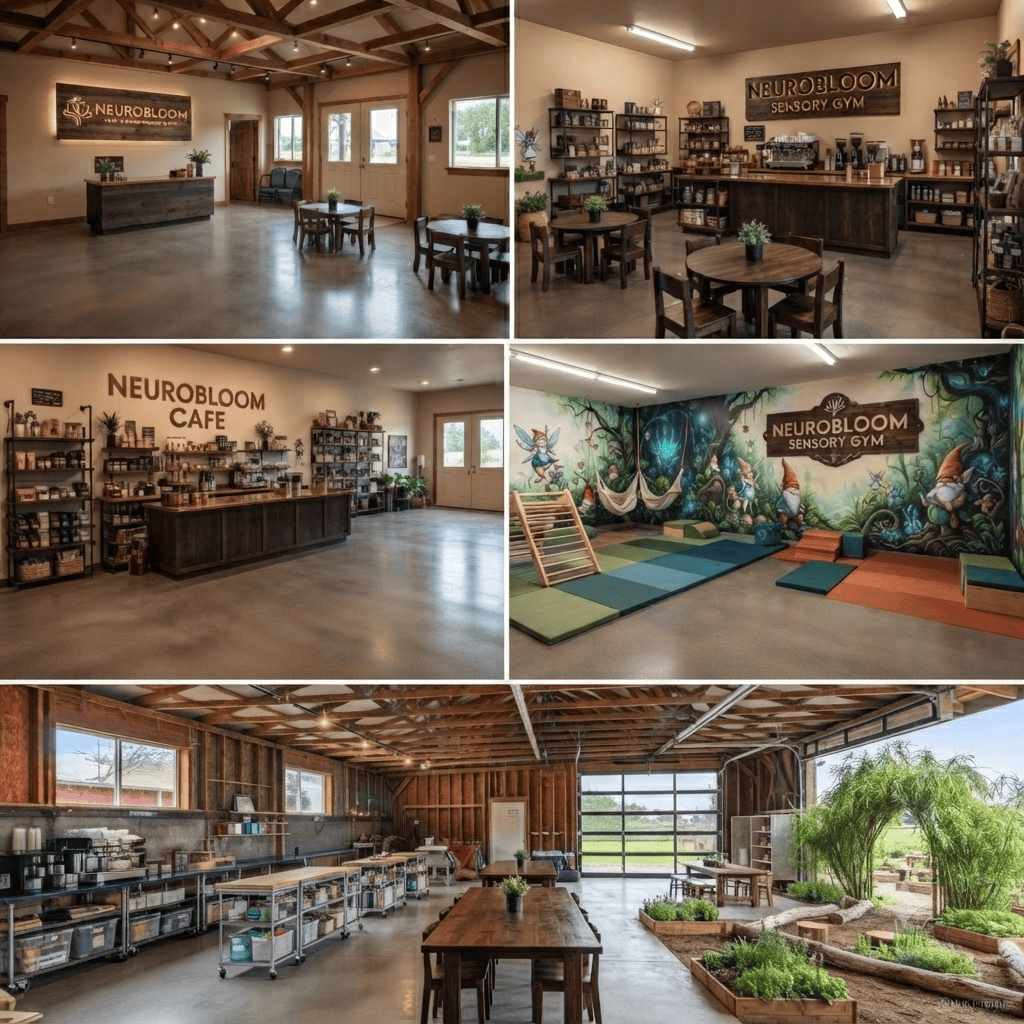
The Creator Grants Fund
This is where we think we’ve already done something the op-ed is asking philanthropy at large to do. Every month, five percent of gross tenant rent flows from NeuroHomes Communities into the Foundation, pooled specifically for residents. A resident with a business idea, an art project, or another creative pursuit applies directly to the Board for funding. It’s money residents have already contributed themselves, and it’s structured from day one to protect SSI eligibility rather than put it at risk, the exact bind the Ford piece describes artists facing with lump-sum grants elsewhere.
We didn’t add this after the fact. It’s built into Phase 1, funded by the houses themselves, because we didn’t want to be another institution that funds disabled creativity without accounting for the disability part.
What it means to not treat disability as niche
The Ford piece’s central claim, that disability shouldn’t be a siloed funding category but a lens that runs through everything, is the same claim we’re trying to make architecturally. Housing, income, clinical support, and creative practice aren’t separate programs stacked next to each other here. They’re one design, because splitting them apart is exactly what leaves people choosing between stability and self-expression in the first place.
Autism as artism means the Makerspace and the Creator Grants Fund aren’t amenities layered onto housing. They’re evidence that a home built around a person’s whole life, disability included from the start rather than accounted for later, is what actually makes a housing model work.
This piece is an invitation to explore how disability is not a niche funding area, but a vital source of artistic innovation and democratic imagination that should inform philanthropy’s broader priorities.
Read the full piece here: https://www.fordfoundation.org/learning/library/learning-reflections/what-disabled-artists-want-philanthropy-to-know/
 NeuroHomes